For OTs, PTs and case managers
Refer a client for a Dolphin FIS surface
You have assessed the client, you know what the surface has to do, and you need a supplier who will not quietly substitute something else, will not tell the family it is covered when it is not, and will tell you before delivery day if the frame in that house cannot take the surface you specified.
This page is the referral route for occupational therapists, physical therapists, wound-care nurses and case managers. It sets out what we need from you, what we check before anything ships, what comes back to you and when, and the short list of things we will not do — which matters to you as much as the list of things we will.
- Who refers
- OTs, PTs, wound-care nurses, case managers
- We supply
- Dolphin® FIS® surfaces, rented monthly or bought outright
- We do not
- Bill Medicare, submit insurance claims, or write an LMN
- Trial requests
- Scoped case by case — ask on the clinician hub
How a referral runs
- 1
You send the referral
The clinical requirement, the configuration if you have specified one, the frame, the client’s weight and the date. Partial information is workable; tell us what you do not yet know.
- 2
We check fit and capacity
Configuration against the frame’s deck dimensions and its rated load, and the surface capacity against the client’s weight. If it does not work, you hear from us, not the family.
- 3
We confirm availability and cost
Stock, the monthly rental or purchase price, and the freight, in writing to you and to whoever is paying. Nothing is quoted to a family that has not been quoted to you.
- 4
Delivery is arranged with the household
We contact whoever is receiving the surface to arrange the delivery and the handover, with your referral kept intact rather than restarted as a new enquiry.
- 5
You are told when it ships
Ship confirmation and the receiving date come back to you, so you are not finding out from a client at the next visit.
What we need in the referral
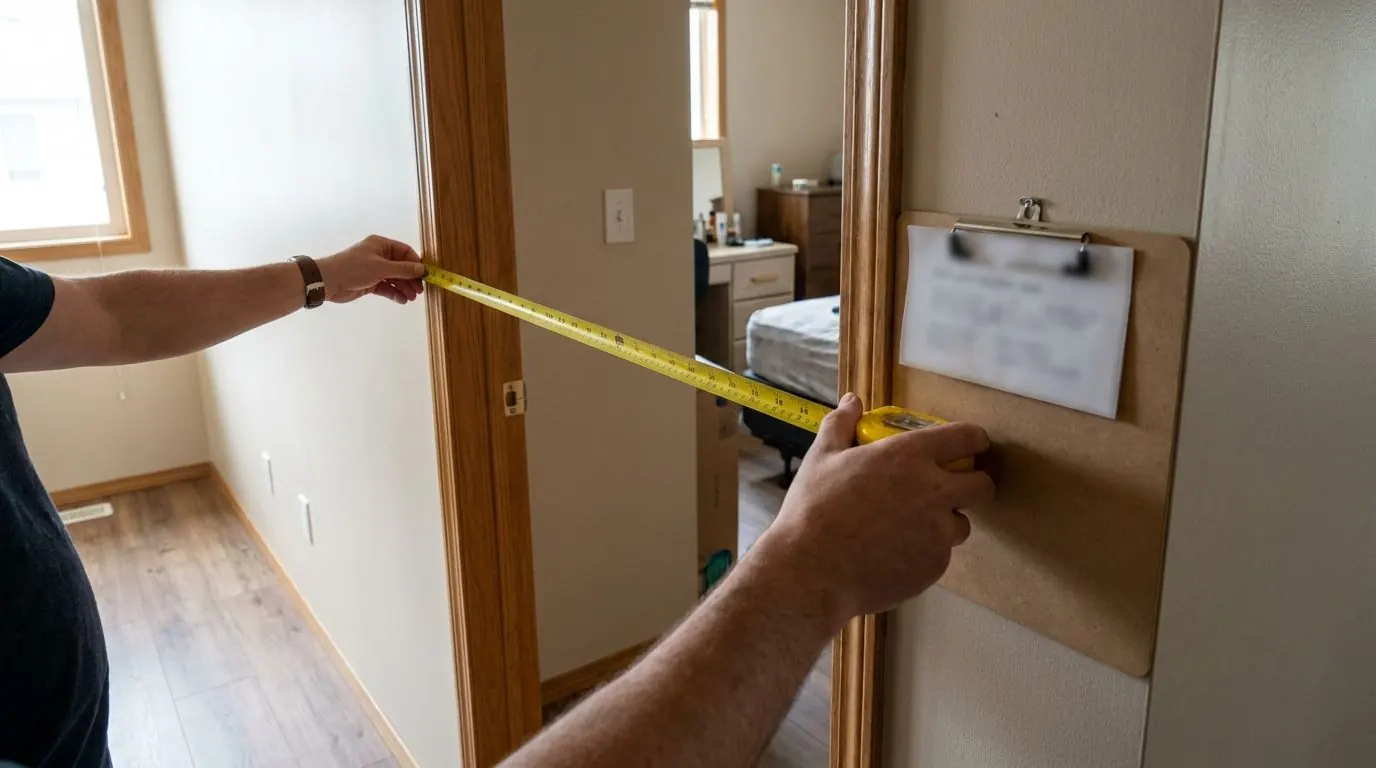
The two things that most often hold a referral up are the frame and the weight, and both are things you are better placed to observe than we are. The frame decides the configuration: Dolphin surfaces come in 35, 42 and 48 inch widths and 82 inch lengths, with an 88 inch step-deck version and an expandable model Joerns rates from 80 to 92 inches, at 8 or 10 inch depths. The client’s weight decides the capacity band, and the frame under the surface has its own rated limit that the mattress figure does not override.
Everything else is context we can work with. If the client is being discharged, the date and the unit. If there is an existing surface in the home, what it is. If a funding conversation is already running, who is having it. If the home has a constraint — a third-floor walk-up, no elevator, a bedroom an 82-inch surface cannot turn into — say so now rather than letting a delivery discover it.
- The clinical requirement, in your words
- The configuration, if you have specified one
- Bed frame make and model, or measured deck width and length
- The frame’s rated load capacity, if it is known
- The client’s approximate weight
- Rental or purchase, and who is paying
- The date the surface is needed, and what that date depends on
- The best contact at the home, and whether we may contact them directly
What we check before anything ships
Fit first. Joerns states that entrapment risk arises when a mattress leaves gaps of even a few inches between it and the head panel, foot panel or rails, and that the equipment is not to be used when such gaps are present. So we ask for the frame, and if the answer is a frame that cannot take any configuration we carry, we tell you before we tell the family, so that you can decide what the plan becomes.
Then the environment. The system runs on mains power at 115/230 VAC, 50/60 Hz, and Joerns rates it to operate between 50 °F and 95 °F at 30% to 75% relative humidity, non-condensing, with an IPX2 enclosure. Homes outside that range are not common, but they exist, and they are far easier to hear about from a clinician who has been in the house than from a driver who has not.
Then the handover: who will be there, who is doing the caring, and whether anyone in the household will be able to use a comfort adjustment and find a CPR deflation valve at three in the morning. We cover all of it at delivery. Knowing in advance who we will be showing it to changes how we do it.
What we will not do
We will not choose the surface. You have assessed the client; we supply equipment. If a referral arrives without a specification we will ask what the requirement is rather than pick something that fits a budget, and if a family asks us to override a clinician’s specification we will send them back to you.
We will not tell a family the equipment is covered. Fluid immersion simulation has no HCPCS code of its own, a Dolphin FIS is not an air-fluidized bed, and at least one major commercial payer classifies fluid immersion simulation as investigational and considers it institutional equipment inappropriate for home use. We do not bill Medicare and we do not submit claims. Where a covered Group 2 surface would meet the need, we say so, even though it costs us the referral.
We will not write, supply or pre-fill a Letter of Medical Necessity. That is a clinician’s document, and an administrator knows what a seller-written one is worth. We can provide an itemized receipt showing the item, the date, the amount and a description suited to substantiation. That is the correct division of labor.
And we will not describe what this equipment does beyond what the manufacturer does. Joerns describes fluid immersion simulation as reducing soft tissue distortion and promoting blood flow, as a platform for the prevention and healing of pressure injuries through Stage 4 and for treating patients with post-operative flaps and grafts, and then adds that its clinical indications are guidelines and should be taken only as recommendations for consideration during individual patient assessment by the clinician. That last sentence is Joerns’, and it governs everything we say.
Funding, for the conversation you will be having anyway
Families ask you, not us, whether this is paid for. The short version to give them: it is bought or rented privately; we do not bill Medicare and do not submit claims; and an HSA or FSA claim is a conversation with their plan administrator, usually supported by a Letter of Medical Necessity from a clinician, with the administrator deciding.
The longer version — what Medicare’s Group 1, Group 2 and Group 3 categories actually are, and what a clinician has to document for each — is in the insurance section. It is written to be readable by a family and accurate enough to hand to a colleague, precisely so that you are not the one explaining HCPCS categories at the end of a home visit.
Trials, and equipment already in the home
Requests to trial a surface before committing come mostly from facilities and from clinicians building a case for a client. Ask through the clinician hub and tell us what you would need to see in order to decide. We would rather scope that honestly against stock and freight than promise an arrangement that turns out not to exist.
If a surface we supplied is already in a client’s home and something is not right, contact us directly rather than leaving the family to work out whether it is a fault. A system that has been off mains power for longer than the battery covers, a storage switch left out of the battery-on position so the battery never recharges, and a control unit unplugged for a vacuum cleaner account for most of what gets reported as a failure.
Referral checklist
- Client’s approximate weight and the clinical requirement
- Bed frame make and model, or measured deck width and length
- The frame’s rated load capacity where known
- Whether the frame is flat, articulating or step-deck
- Rail type and height above the current mattress
- Rental or purchase, and who is paying
- Date needed, and what the date depends on
- Household contact, and consent for us to contact them
- Anything about the home that would surprise a delivery: stairs, access, no elevator, no suitable outlet
Send a referral
Referral received
Thank you. We will call you to confirm the equipment and then contact the client or family to book delivery. You will hear back from us once it is set up.
If it is urgent, say so on the contact page and we will call you first.
Questions people ask us
Can I refer a client without knowing which configuration they need?
Will you contact my client directly?
Do you bill Medicare or insurance for a referred client?
Can you write a Letter of Medical Necessity for the family?
What if the frame in the home will not take the surface?
Can a client trial a surface first?
Do you supply seated and pediatric configurations too?
Send a referral
Give us the requirement, the frame and the date. We will confirm the fit, the availability and the cost in writing to you — and tell you honestly if a covered surface through a DME supplier is the better route for your client.